 By Auburndale Soccer Club
Your kid's first travel-soccer tryout is a big deal — for the kid AND the parent. The kid is nervous about whether they'll "make the team." The parent is nervous about saying the wrong thing on the way in. Both are normal.
This is the practical guide we hand out to first-time Auburndale tryout families. It covers what to pack, what happens during the session, and the single biggest mistake parents make. None of it is rocket science, but having it written down makes the morning a lot less stressful.
The pack list
- Cleats that fit. If they were sized last year and your kid has grown, they don't fit. Outdoor soccer cleats only — no turf shoes, no trainers, no cleats with toe spikes (those are baseball cleats and they're not allowed).
- Shin guards. Required, no exceptions. Even at the youngest age. They go under the socks, with the socks pulled all the way up.
- Soccer socks long enough to cover the shin guard. Basketball or athletic socks won't cut it.
- A size 4 ball (ages 8–12) or size 5 (age 13+). For U-8 and younger, size 3. If you're not sure, ask the club before tryouts. Bring it inflated and write your kid's name on it in permanent marker.
- Water bottle. Big one. Filled. Tryouts are 60–90 minutes of running.
- Comfortable shorts and a t-shirt. Avoid the team jersey from their last club — it can come off as showing off, and there's no need.
- A jacket and pants for after. Even on a warm day, kids cool down fast post-tryout.
- A snack for after. Apple, banana, granola bar. Not before — running on a full stomach makes kids feel sick.
What actually happens during a tryout
Most clubs run tryouts in a similar format. At an Auburndale tryout a session looks like:
- 15 minutes: arrival, check-in, get the kid number-bibbed, light warm-up
- 20 minutes: ball-control drills — first touch, dribbling, passing in pairs. Coaches watch how kids handle the ball and how they interact with teammates.
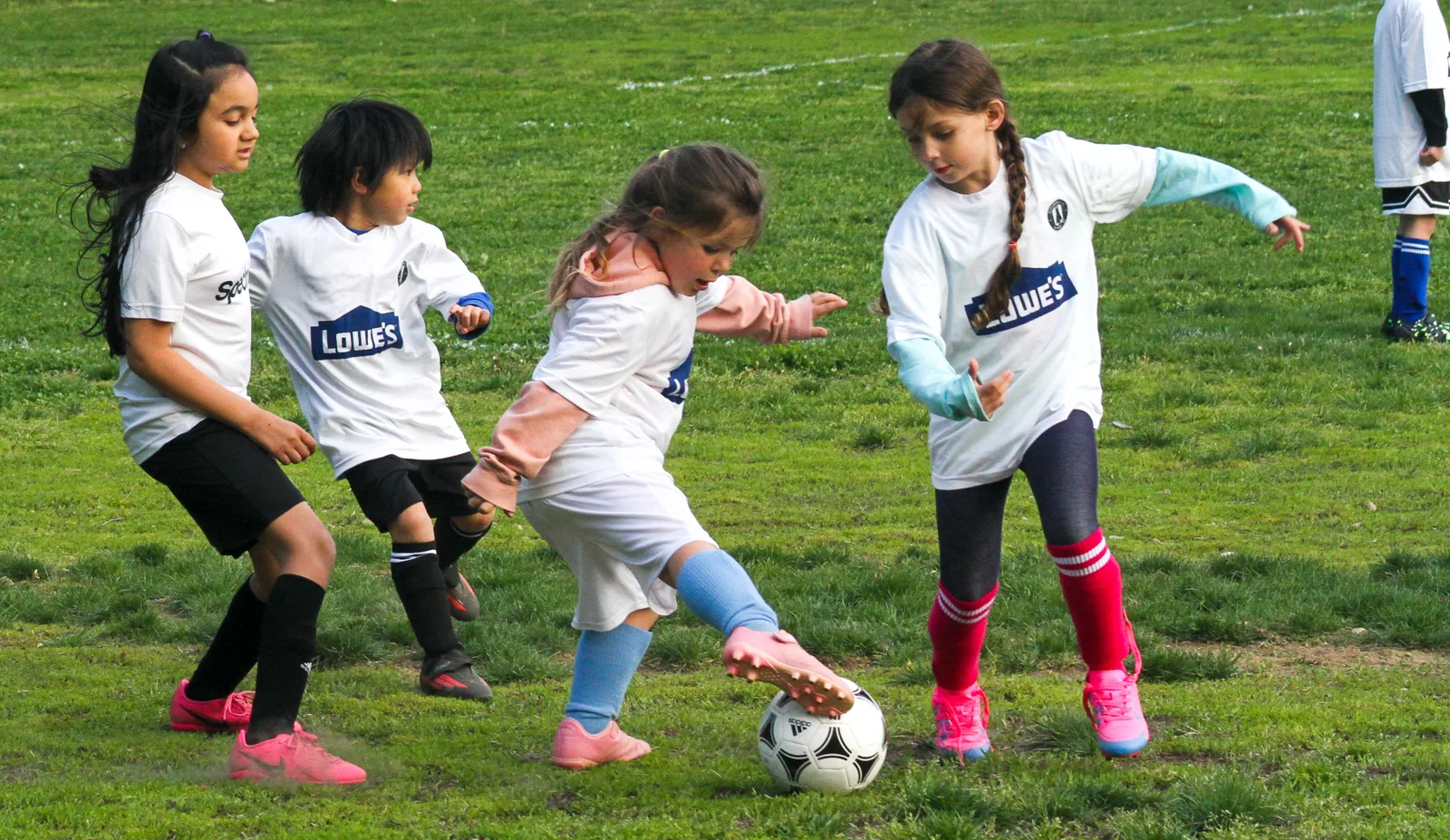
- 20–30 minutes: small-sided games (3v3, 4v4, 5v5). This is the most important part. Coaches watch how kids make decisions in a real game context — when to pass, when to dribble, what to do without the ball.
- 10–15 minutes: a larger scrimmage. Coaches confirm what they saw in the small-sided games.
Coaches are not just looking for the kid who scores the most goals. They're looking for kids who: can control a moving ball with their first touch, see passes before they happen, communicate with teammates, and keep playing when they make a mistake. A kid who scores three goals but disappears the rest of the time often loses out to a kid who never scores but is constantly in the right spot, talking to teammates, and chasing every loose ball.
The one thing parents do that makes it worse
Coach from the sideline.
Don't. Not because it bothers the coaches (it does, but that's secondary). It bothers your kid. They're trying to listen to a coach they don't know yet, in a setting they've never been in, with kids they've never played with, and what they hear loudest is your voice telling them to "shoot!" or "pass!" or "hustle!" That voice — yours — adds pressure they don't need.
Cheer. "Nice play" is fine. "Tough one, keep going" is fine. Tactical instructions are not. Let the coaches coach. Your kid will play better.
What to say on the way in (and on the way home)
On the way in: "Have fun. Listen to the coaches. Try every drill — even the ones you haven't done before." That's it. No "make the team" talk. No "this is important" talk. The kid already knows.
On the way home: The single best question you can ask is "Did you have fun?" If the answer is yes, the rest follows. If the answer is no, ask why — and listen carefully, because what you hear next matters more than the tryout result. A 9-year-old who tells you they didn't have fun at tryouts is telling you something real about whether soccer is right for them right now.
Avoid "How did it go?" — kids don't have a useful answer to that. Avoid "Do you think you made it?" — they don't know, and asking them to predict raises the stakes. Just "Did you have fun?" Wait for the answer. Listen.
What happens after
Most clubs (Auburndale included) make roster offers within a week of the final tryout date. You'll typically get a phone call or email. If your kid makes the team, congratulations — accept or decline by the deadline given. If they don't, the club almost always has space in Intramural and there's no shame in playing rec for a year and trying out again next cycle. Plenty of Auburndale Travel kids did exactly that.
Whatever the outcome, the day they tried out for a competitive team is a day they should remember as a good one. That's mostly on you.
Auburndale's Premier Travel tryouts run at Fort Totten on an annual cycle, with supplemental tryouts year-round. Get in touch if you have questions before the day.